
Overview
Language in Hikarima reflects the nation's soul — a place where light meets silence, where tradition walks beside progress, and where every word spoken carries the weight of the land itself. Hikarima is officially a trilingual nation, recognizing three languages that together represent its past, its present, and its daily life. All three are taught in schools, protected by law, and celebrated as pillars of national identity.
Hikaran
The National Language — Heart of Hikarima
Hikaran is the language of the Constitution, the courts, the National Assembly, and the Presidential office. Every citizen learns it from childhood, and it serves as the common thread that ties together the nation. Hikaran evolved from early settler communities who spoke Old English, gradually shaped by the land, the climate, and the people who built Hikarima from the ground up. Today, Hikaran is English in structure and grammar — but with its own vocabulary, rhythm, and cultural weight.
Grammar & Rules
- Word Order: Subject → Verb → Object (identical to English)
- Verb Tenses: Same system as English — past, present, future, continuous, and perfect forms
- Plurals: -s or -es (standard English); words from Elvar ending in a vowel add -ven (e.g., mora → moraven)
- Capitalization: All government titles, provinces, cities, and national institutions capitalized mid-sentence
- Formal Address: "You" for equals; "Your Grace / Your Honor / Your Excellency" for officials (never shortened)
- Dates: Day → Month → Year (e.g., "the 3rd of June, Year 47 of the Republic")
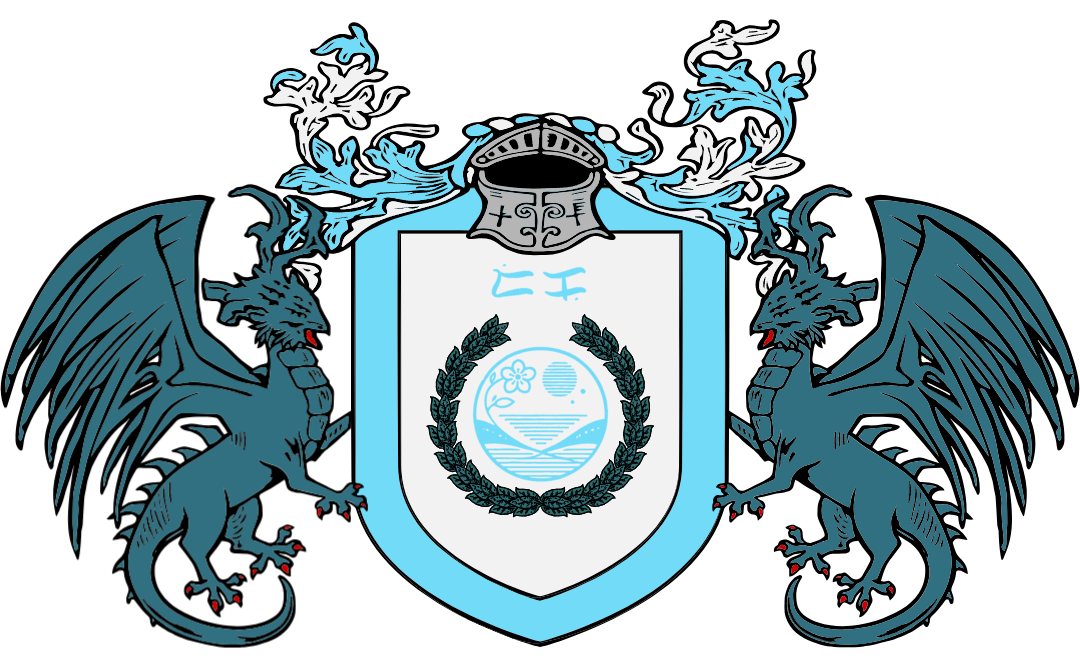
- Writing System: Standard 26-letter Latin alphabet; ceremonial Dawnhand calligraphy on government seals
Vocabulary — Common Hikaran Words
| Word | Pronunciation | Meaning |
|---|---|---|
| Dawning | DAW-ning | First light of morning; a fresh start |
| Greyveil | GRAY-vale | The grey sky before snow; used poetically for uncertainty |
| Thornward | THORN-ward | Direction facing inland, away from the coast |
| Kindfall | KIND-fall | A moment of unexpected generosity |
| Hollowtide | HOL-oh-tide | The quiet weeks of deep winter |
| Steelborn | STEEL-born | Someone raised through hardship; deep term of respect |
| Clearwater | CLEAR-waw-ter | Honest speech; "to speak clearwater" = to tell plain truth |
Hikaran Proverbs
- "The mountain does not move for the storm — and neither should you."
- "A fire shared is a fire that lasts the winter."
- "Speak clearwater or do not speak at all."
Valdish
The Trade Language — Voice of Daily Life
Valdish is the language Hikarimans speak at the market, at the dinner table, and with strangers from other provinces. Older than Hikaran in its spoken form, it developed among the trading communities and harbor towns that established Hikarima's early economy. Where Hikaran is formal and precise, Valdish is warm, flexible, and fast. Most Hikarimans switch fluidly between the two — Hikaran at work and in formal settings, Valdish at home and among friends.
Grammar Differences from Hikaran
- Contractions are standard — the normal written and spoken form (not informal)
- Questions by tone — rising intonation signals a question without flipping word order ("You're coming tonight?")
- Relaxed verb agreement — third-person singular -s frequently dropped in conversation ("He run the docks.")
- Double adjectives accepted without comma ("A long cold walk.", "A good strong brew.")
- "Aye" and "Nay" are standard replacements for "yes" and "no"; "yeah" common among youth
Vocabulary — Common Valdish Words
| Word | Pronunciation | Meaning |
|---|---|---|
| Harrow | HAIR-oh | Tough, difficult ("That was a harrow climb.") |
| Skelf | SKELF | A small thing; used affectionately for children |
| Brew | BROO | Any hot drink; especially the local grain tea |
| Wending | WEN-ding | Wandering without clear destination |
| Saltborn | SALT-born | Someone from a coastal city; used with pride |
| Greycoat | GRAY-coat | An elder; respectful slang |
| Tidewatch | TIDE-watch | Late-night shift; anyone working past midnight |
Elvar
The Heritage Language — Voice of the Land
Elvar is the oldest language spoken on Hikariman soil — predating the nation itself by an unknown number of centuries. Spoken by the indigenous communities who lived in the island's forests, plains, and mountain valleys long before the first settler towns were built, it is the language of the land: rooted in nature, seasons, and the slow rhythms of Hikarima's wilderness. It is concentrated in rural provinces, particularly Sakurakawa, Ginrei, Shiranami, and the highlands of Yurahime. Among elder generations in these regions, Elvar is often the first and preferred language.
Grammar — Key Features
- Verb-final word order: "The hunter the river crossed." (verb at end)
- Living vs. Still nouns: All nouns classified as living (people, animals, plants, rivers) or still (stone, sky, tools, buildings) — no gender
- Compound words the norm: Dense, layered vocabulary; "the last frost before true spring" = Verunskalden (one word)
- No future tense: Future expressed through context and intent marker "omen" ("Omen the river flood." = "The river will flood.")
- Plural by repetition: doral (one tree) → doral · doral (many trees / a forest)
- Scripts: Modern Elvar uses the Latin alphabet; older carved texts use Rootmark
Common Elvar Words (now used in everyday Hikaran/Valdish)
| Word | Pronunciation | Meaning |
|---|---|---|
| Moraven | mor-AH-ven | Open land belonging to everyone; common ground |
| Verun | VEH-run | The last frost of winter |
| Skaldra | SKAL-dra | A story told only in winter, around fire |
| Olveth | OL-veth | The sound a forest makes just before rain |
| Dunmark | DUN-mark | A boundary stone; also a personal limit |
| Grenweld | GREN-weld | A protected wilderness; land set aside untouched |
| Halvorn | HAL-vorn | The in-between season — neither winter nor spring |
Elvar Proverbs
- "Omen the stone outlast the hand that placed it." — The stone will outlast the hand that placed it.
- "Moraven doral · doral." — The common ground grows forests. (Shared effort yields great results.)
- "Verun passes. It always passes." — A saying of endurance used during hardship.
Protection & Preservation
The National Assembly passed the Elvar Heritage Protection Act, mandating: basic Elvar instruction in all primary schools nationwide (1 hour/week minimum); full Elvar curriculum in provinces where over 20% of residents speak it; government funding for Elvar documentation, oral history recording, and publication; and the annual Elvar Voice Festival held each autumn.
The National Elvar Institute, based in Marudenshi, employs linguists, historians, and community elders to maintain living records of all regional Elvar dialects.
Language in Daily Life — When to Use Which
| Setting | Primary Language |
|---|---|
| Government proceedings & legislation | Hikaran |
| Courts and legal documents | Hikaran |
| Military (formal) | Hikaran |
| Schools (formal instruction) | Hikaran |
| Business and commerce | Valdish |
| Casual conversation | Valdish |
| Entertainment and media | Valdish (Hikaran subtitles on formal broadcasts) |
| Rural communities (Sakurakawa, Ginrei, Shiranami, Yurahime) | Elvar or Valdish |
| State ceremonies and national observances | Hikaran (with Elvar passages by tradition) |
| Elder community gatherings | Elvar |
Names in Hikarima
Hikariman names reflect the nation's trilingual identity. There is no enforced naming convention — names drawn from any of the three languages or blended from multiple are equally valid and common. Many Hikarimans carry one name from each tradition: a formal Hikaran name for official records, an everyday Valdish nickname, and an Elvar name given by elders at birth.
| Origin | Character | Examples |
|---|---|---|
| Hikaran names | Clear, strong, easy to pronounce | Aldren, Mara, Solen, Crestwyn, Davan, Lyris |
| Valdish names | Shorter, warmer | Bren, Tilda, Skar, Wyn, Rusk, Lenna |
| Elvar names | Compound or nature-rooted | Halvorn, Grenweld, Verun, Doral, Skaldra |
The National Motto
"Wisdom Guides, Unity Endures."
| Hikaran | "Wisdom Guides, Unity Endures." — On the Presidential Seal |
| Valdish | Valdish equivalent — On the reverse of all Myra (₥) banknotes |
| Elvar | Elvar equivalent — On the foundation stone of the National Assembly, Marudenshi |
Maintained by the Ministry of Education in coordination with the National Elvar Institute and the Office of National Language Standards.